






WONDERLAB’s Targeted Microbiota Management Method Showcased at the National Academic Conference on Weight Management, Reshaping the Weight-Management Landscape Through Multidisciplinary Collaboration
2025-05-15
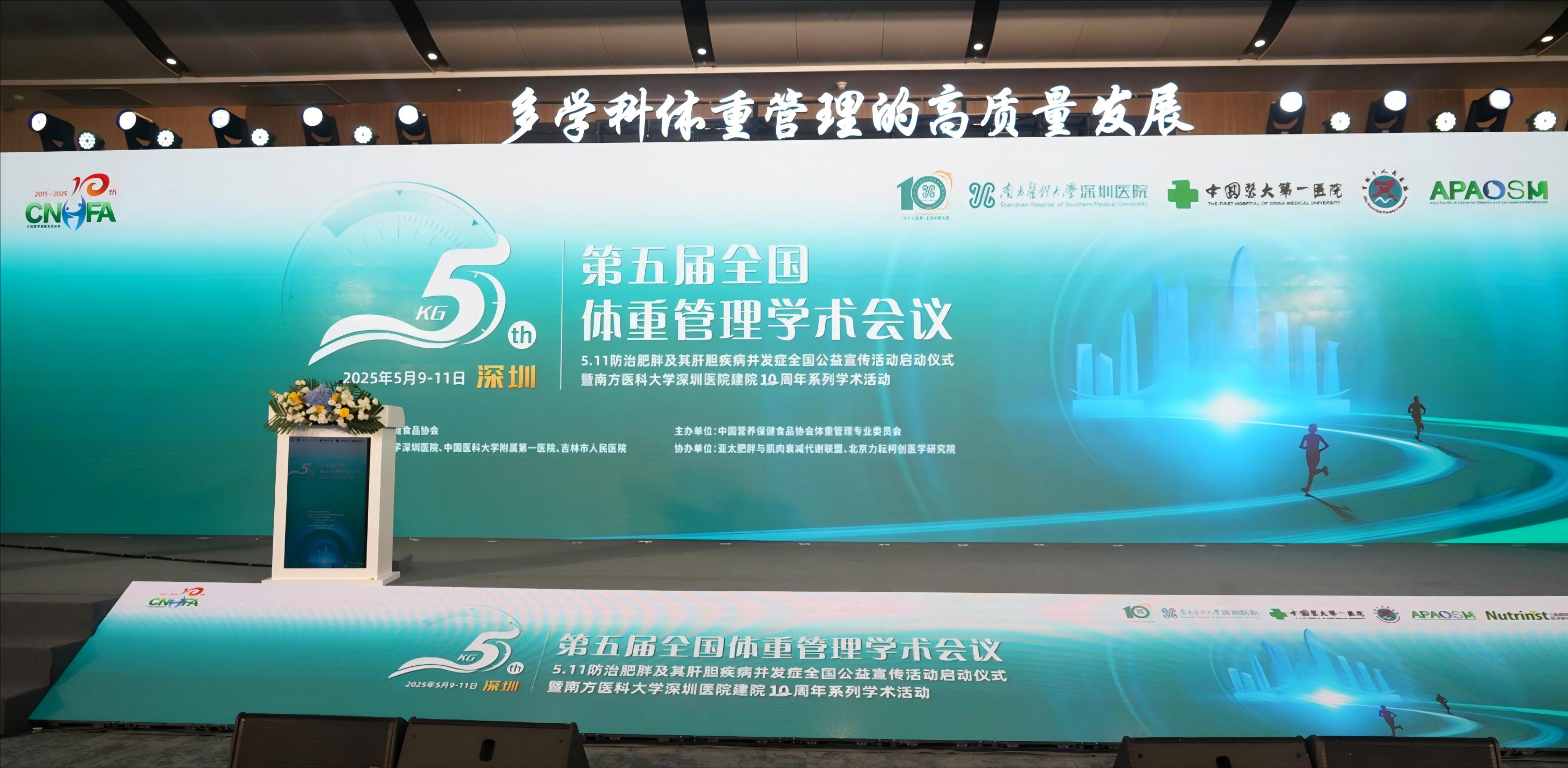
On May 9, the 5th National Academic Conference on Weight Management was held in Shenzhen under the guidance of the China Nutrition and Health Food Association and hosted by its Weight Management Specialised Committee. With the theme “High-Quality Multidisciplinary Development of Weight Management,” the conference brought together experts and scholars from medical institutions across China to discuss frontier topics in weight management.
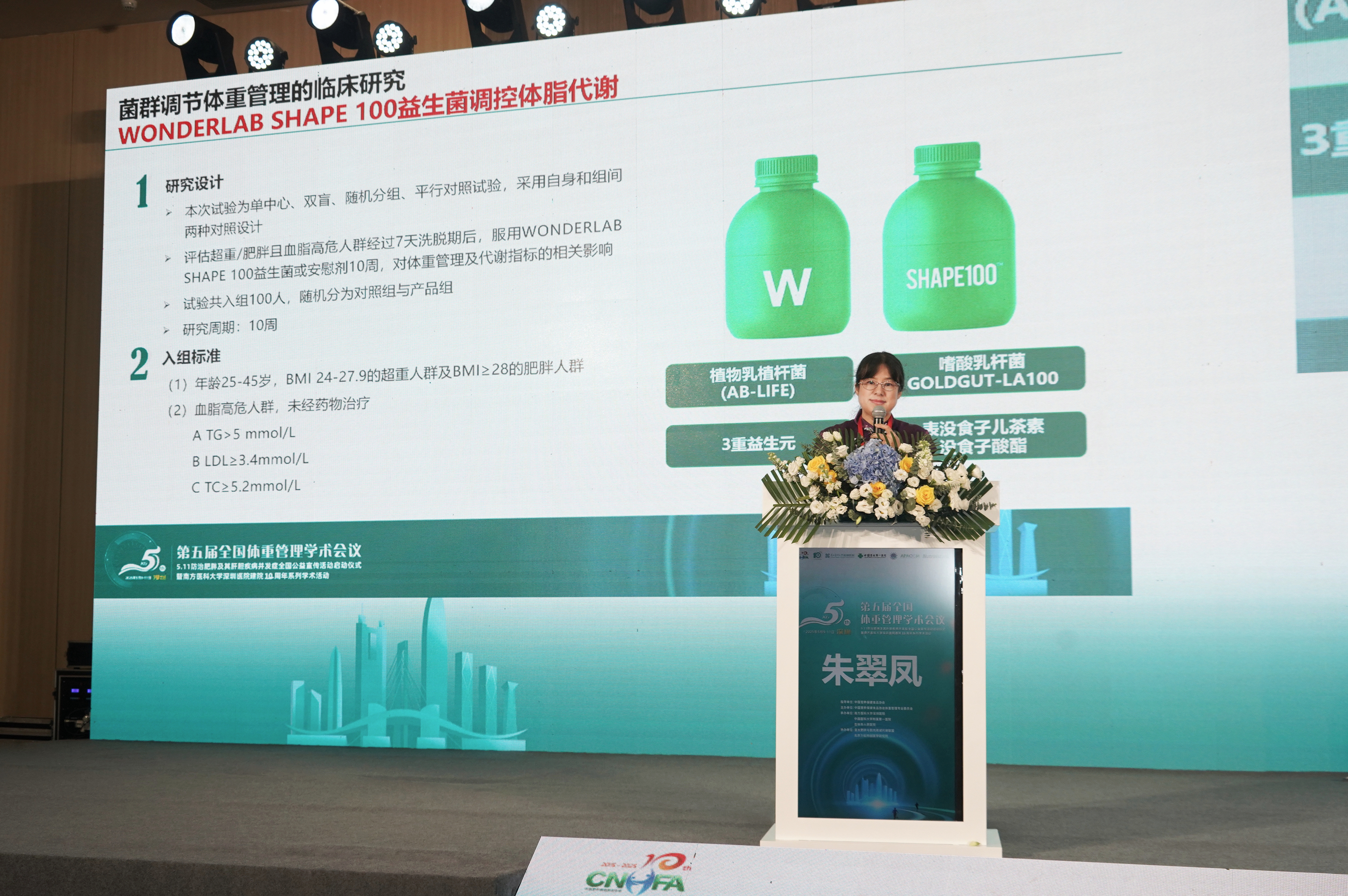
As a representative company in probiotic-based weight management, WONDERLAB shared its latest clinical research related to the “Targeted Microbiota Management Method.” The research was led by Cuifeng Zhu, Executive Vice-President of the Asia Pacific Alliance for Obesity and Sarcopenia Metabolism (APAOSM) and Chair of the Weight Management Specialised Committee of the China Nutrition and Health Food Association. By combining gut-microbiota modulation with clinical nutrition intervention, the research provides a science-based pathway for the field of weight management.
From an “Energy Gap” to “Targeted Microbiota”: Science-Based Weight Management May Be Entering a New Phase
The global population with overweight is rising rapidly, while traditional weight-management approaches face an industry-wide bottleneck of being “effective in the short term but ineffective in the long term.” As a biotechnology innovation company, WONDERLAB has consistently pursued R&D-driven growth. Drawing on years of research into the gut microbiome, it proposed a science-based solution for the probiotic industry for the first time in March this year: a dual-engine weight-management intervention model combining an “energy gap” with “targeted microbiota” to support science-based weight management. The company’s researchers said that using microbiome modulators to improve dysbiosis may help support the long-term implementation of healthy weight-management plans.
At the academic conference, Professor Cuifeng Zhu shared detailed clinical research on microbiota regulation for weight management. She said: “Clinical research on WONDERLAB SHAPE100™ Probiotics (referred to as ‘S100’ for short) shows that, after taking the product for 10 weeks, overweight or obese participants experienced significant changes in weight-related indicators.”
Of particular note, the S100 probiotic referred to in WONDERLAB’s Targeted Microbiota Management Method™ is designed to support targeted metabolic-health intervention by focusing on gut-microbiota composition. According to the source, WONDERLAB launched the product in January 2024 as a concentrated demonstration of its independent innovation capabilities. Designed around a dual-track technical pathway combining proprietary strains with internationally certified strains, the product contains the proprietary strain Lactobacillus acidophilus GOLDGUT-LA100, together with a combination of strains recognised under the European Food Safety Authority’s Qualified Presumption of Safety (QPS) framework, as well as multiple prebiotics and functional ingredients intended to support healthy weight. After launch, it reached top positions in major e-commerce sales rankings.
Targeted Microbiota and Health-Oriented Consumption Reflect Industry–Academia–Research Integration in Weight Management
In June 2024, the National Health Commission, together with 15 other government departments, launched the three-year “Weight Management Year” action. It called for the development of a science-based, precision-intervention weight-management system and encouraged a shift from “disease treatment” toward “life-course health management.” At the same time, relevant research has shown that gut-microbiota dysbiosis is closely associated with obesity and that people with lower gut-microbiota diversity may be more likely to develop obesity-related conditions.
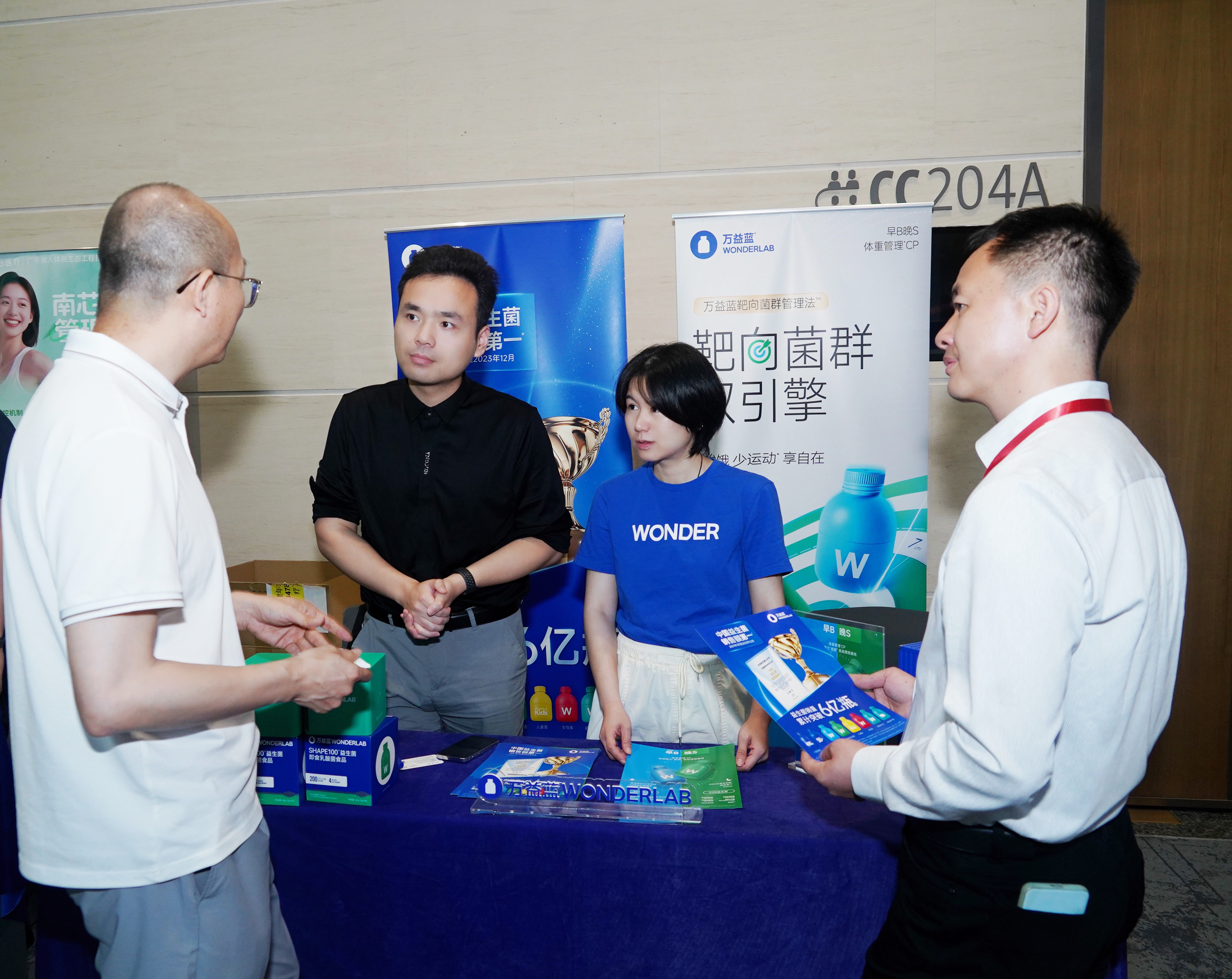
Against this backdrop, drawing on years of research, WONDERLAB developed solutions represented by its Targeted Microbiota Management Method™. By adding “targeted microbiota” to the “energy gap,” it formed a public-facing weight-management approach centred on “targeting energy, targeting the microbiota.” This approach integrates the “energy deficit” principle advocated in the Weight Management Guidance Principles (2024 Edition) with WONDERLAB’s proprietary gut-microbiota targeted-intervention technology. It is intended to help consumers establish a long-term weight-management approach in daily life through a science-based, multi-target strategy presented as safe and without requiring aggressive changes to diet or lifestyle. At the event, WONDERLAB also set up a product display area and exchanged views with participating experts.
Discussing the future of the Targeted Microbiota Management Method, Professor Cuifeng Zhu said at the conference: “The Targeted Microbiota Management Method is expected to improve obesity and metabolic abnormalities with greater precision and effectiveness. Through strategies including precise suppression of overgrowth, targeted replenishment of deficiencies and functional modulation, it can regulate the gut microbiota, improve metabolic status and alleviate obesity symptoms.”
As Li Liangqiu, Executive Vice-President of the China Nutrition and Health Food Association, said in her address at the conference: “I hope that all sectors represented here can genuinely chart a path of industry–academia–research collaboration that combines services and products to support health-oriented consumption.” As the three-year “Weight Management Year” action continues, the importance of bringing together multiple stakeholders to contribute interdisciplinary and integrated innovation is becoming increasingly clear. It is hoped that R&D-driven innovation companies represented by WONDERLAB will, through practice and proprietary innovation, provide consumers with more science-based weight-management pathways and actively contribute to the development of Healthy China 2030.